




How Are Custom Commercial Signs Manufactured?
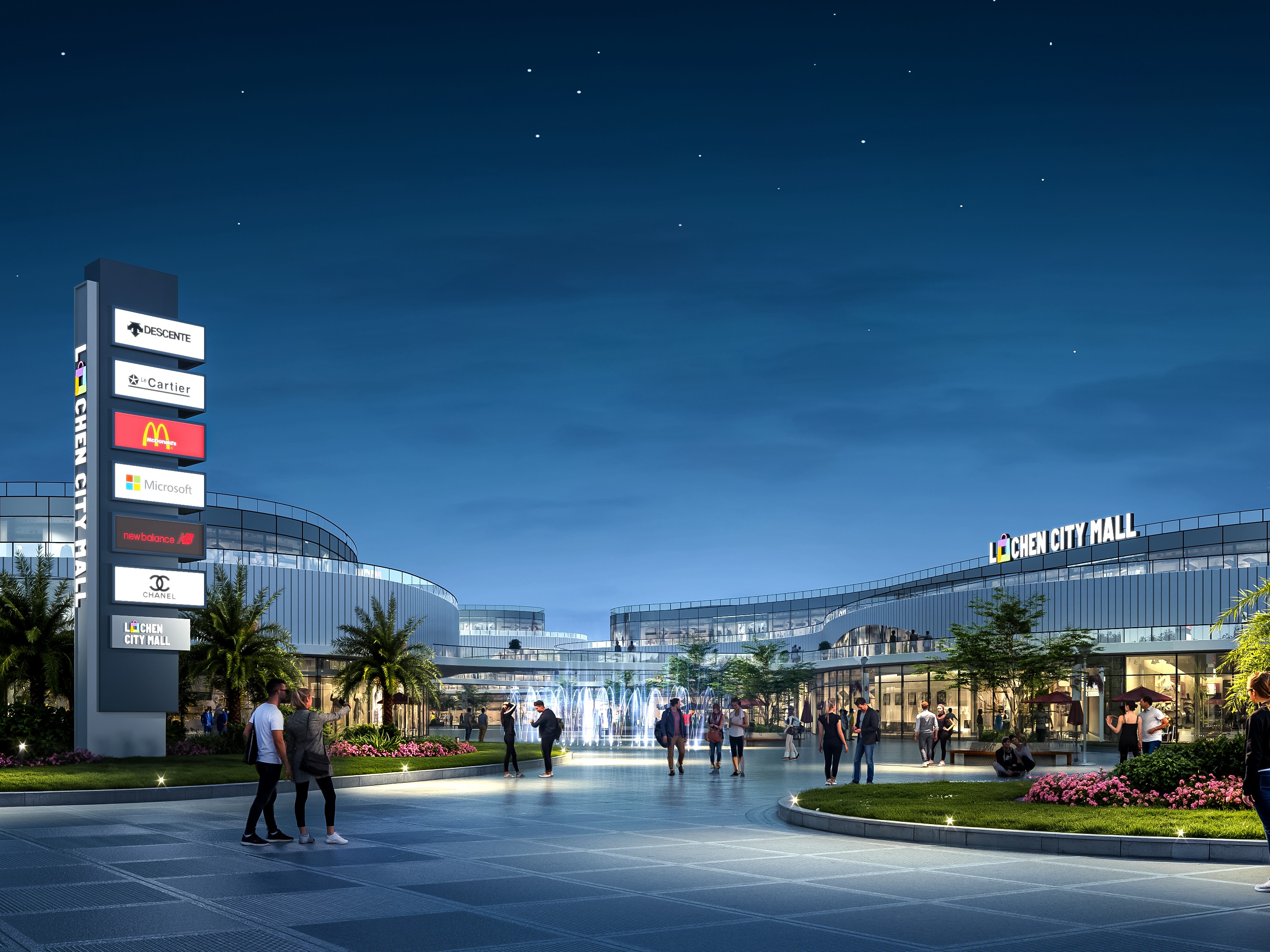
Custom commercial signs go through several key manufacturing stages, from initial design and material preparation to fabrication, finishing, assembly, and final quality testing. Design Development and Engineering Custom commercial sign manufacturing begins with design development and engineering. Based on project requirements, the sign design is established to incorporate its overall appearance, style, dimensions, materials, […]
Custom commercial signs go through several key manufacturing stages, from initial design and material preparation to fabrication, finishing, assembly, and final quality testing.
Design Development and Engineering
Custom commercial sign manufacturing begins with design development and engineering. Based on project requirements, the sign design is established to incorporate its overall appearance, style, dimensions, materials, and other technical specifications.
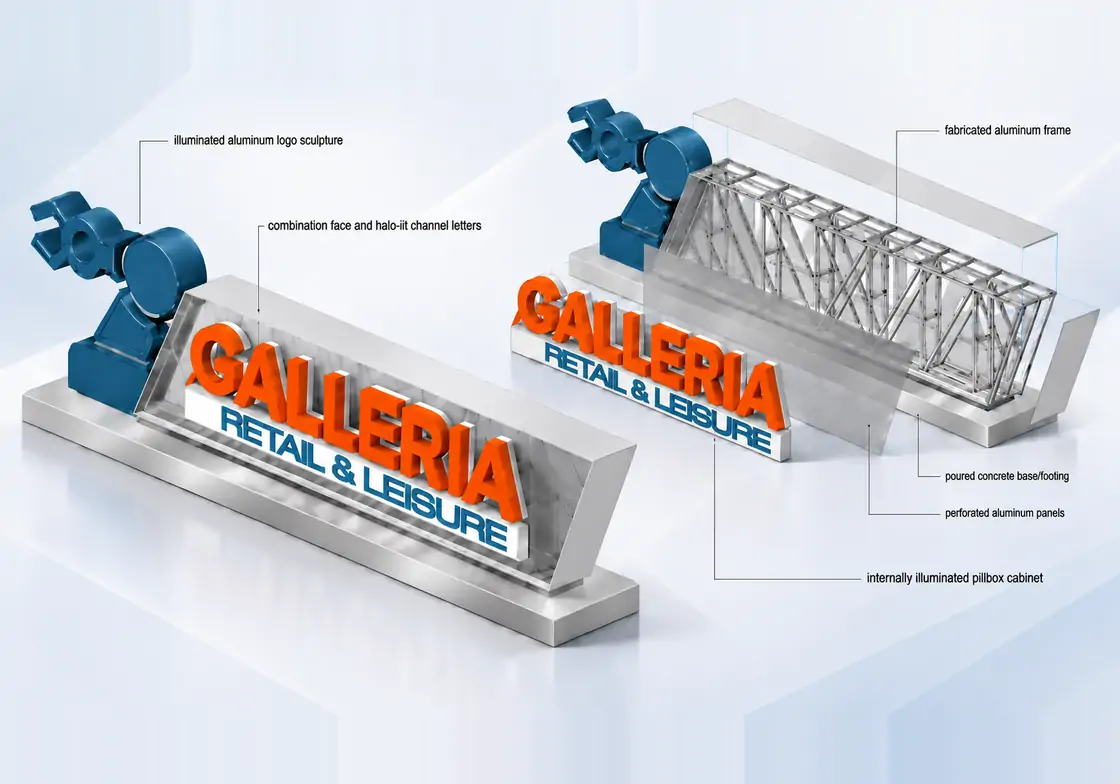
Different types of signage drawings are used throughout this stage to illustrate design concepts, sign layouts, and technical details, helping translate project requirements into manufacturable designs.
Material Selection and Preparation
Commercial signs are made from a variety of materials to meet different functional and project needs.
- Aluminum: Lightweight, corrosion-resistant, and easy to fabricate, aluminum is widely used for custom outdoor business signs, channel letters, and pylon signs.
- Stainless Steel: Known for its strength, durability, and clean appearance, stainless steel is commonly used for metal letters and architectural signage.
- Acrylic: Available in various colors and levels of transparency, acrylic is commonly used for channel letters, light boxes, and illuminated signs.
- Brass: With its distinctive golden appearance and corrosion resistance, brass is often used for decorative letters, plaques, and premium signage.
Fabrication and Component Processing
The fabrication and component processing stage involves three main processes: cutting and engraving, forming and welding, and printing and graphic production.
Cutting and Engraving
These processes shape materials and create detailed designs for sign components.
- Laser Cutting and Wood Cutting: Laser cutting produces precise shapes and dimensions from metal sheets, while wood cutting shapes wooden materials into specified forms.
- Corner Notching: This process removes specific sections from material corners or edges to accommodate bending and joining.
- Engraving: CNC and laser engraving create detailed text, logos, and decorative patterns on material surfaces.
Forming and Welding
These processes shape metal components and join them to form sign structures.
- V-Grooving and Bending:V-shaped grooves are formed on metal sheets, followed by bending them into the required shapes and angles.
- Channel Letter Bending:Metal strips are shaped along letter outlines through controlled bending, forming channel letter returns that define the sides and depth of each letter.
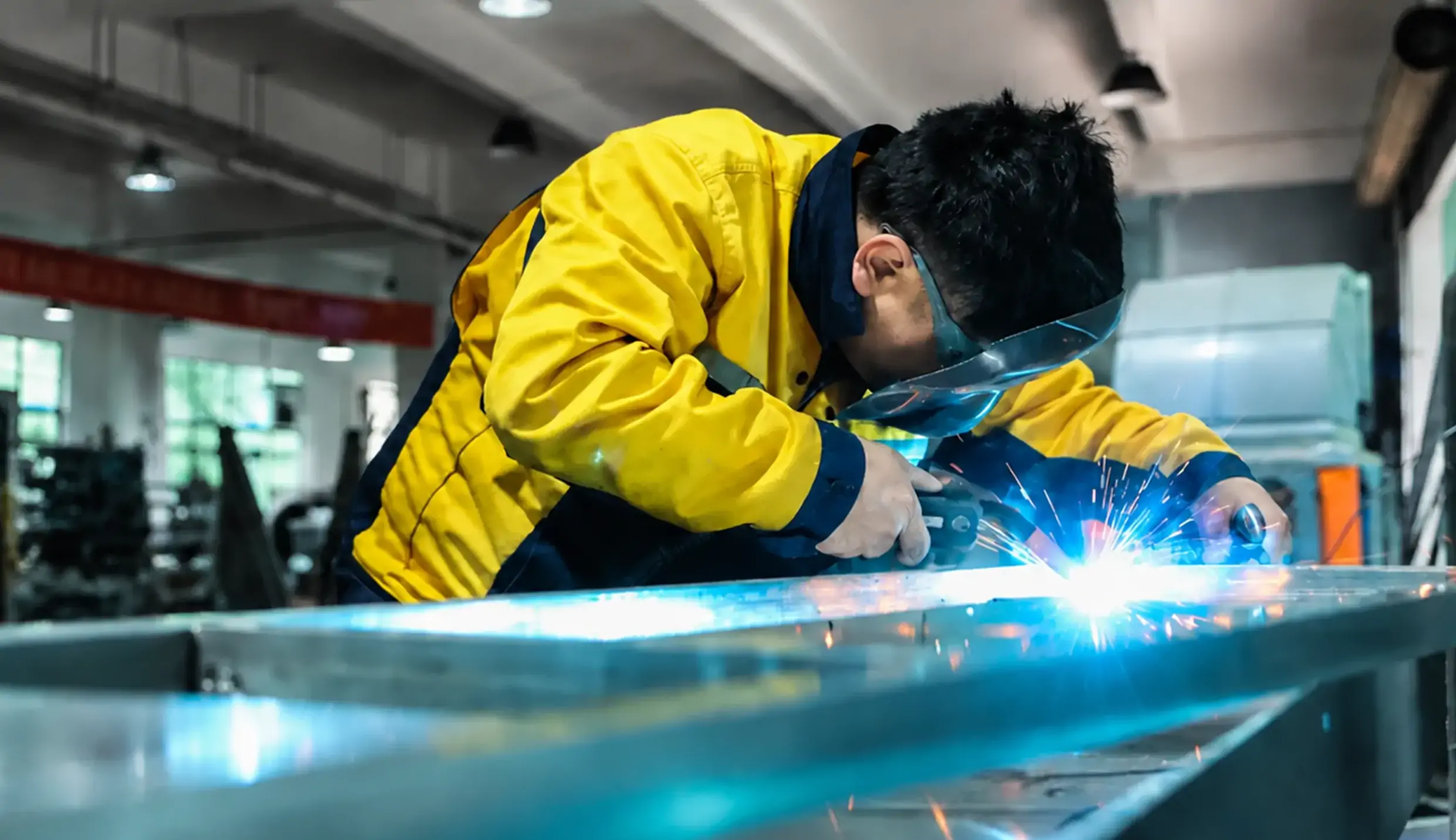
- Metal Welding: Metal components are joined through welding methods such as TIG welding and laser welding, creating strong and seamless connections.
Printing and Graphic Production
These processes add printed colors and graphics to sign surfaces, with lamination providing protection.
- UV Printing: UV printing applies designs, text, and graphics directly onto material surfaces using UV-curable inks.
- Large Format Printing: Large format printing produces oversized graphics and images for signs, displays, and other visual applications.
- Lamination: Lamination applies a protective film over printed graphics to improve durability and protect printed surfaces from everyday wear.
With 15 years of experience and a 22,000 m² automated production facility, LC Sign uses these processes to create accurately shaped, well-crafted sign components and produce custom signs that meet specific design and project requirements. For a closer look at the equipment used in different sign manufacturing processes, explore our Professional Sign Manufacturing Guide.
Planning a Signage Project? Get a Custom Sign Quote
Surface Finishing
Common surface finishing methods for custom commercial signs include:
- Polishing: Polishing smooths material surfaces and improves their shine, creating a clean, bright finish for commercial signs.
- Brushing: Brushing creates fine, consistent linear textures on material surfaces, giving signs a subtle textured finish.
- Painting: Painting applies liquid coatings to sign surfaces to achieve specific colors, finishes, and an additional layer of protection.
- Powder Coating: Powder coating applies dry powder to metal surfaces, which is then heated to form a durable and uniform finish.
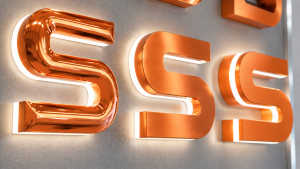
Have a signage project to discuss? Get a Quote Today
Assembly and Electrical Integration
Once all components have been fabricated and finished, they move on to the assembly stage. Individual components are assembled into complete signage products, while LED modules, wiring, and power supplies are installed and connected for illuminated signs.
Quality Inspection and Final Testing
Final quality control involves routine inspections and specialized tests to assess signage quality and reliability.
Routine Quality Inspection
Finished signage products undergo dimensional, appearance, structural, and electrical inspections to verify compliance with design specifications and quality requirements.
Specialized Reliability Testing
Depending on project requirements, specialized tests may be conducted to assess signage durability and performance under different conditions.
| Signage Testing | Testing Equipment | Testing Focus |
|---|---|---|
| Temperature and Humidity Testing | Temperature and Humidity Test Chamber | Checks performance under varying temperature and humidity conditions. |
| UV Resistance Testing | UV Aging Test Chamber | Assesses UV resistance of materials and finishes. |
| Corrosion Resistance Testing | Salt Spray Test Chamber | Checks corrosion resistance of metals and coatings. |
| Strength Testing | Tensile Strength Tester | Measures material and connection strength. |
| Transportation Vibration Testing | Transportation Vibration Test Table | Checks product and packaging resistance to vibration. |
Once quality checks and testing are complete, the finished signs are prepared for packaging and shipment.